| |
| Thursday, 15 October 2026 |
| Picasso and his Women |
| Valerie Woodgate |
 |
Picasso told his biographer, John Richardson, that his work was like a diary – " to understand it, you have to see how it mirrors my life." This lecture examines the way Picasso’s emotional life influenced what he painted and how he painted it. His response to each new love in his life can be seen in the different styles in which his many women were represented. When he fell out of love that fact would be revealed first in his paintings. The lecture concentrates on the seven most important women in his life (two of whom he married). |
|
| Thursday, 19 November 2026 |
| A CELEBRATION OF NATURE; ANTONI GAUDI ( 1852-1926) AND OTHER CATALAN ARCHITECTS |
| Jacqueline Cockburn |
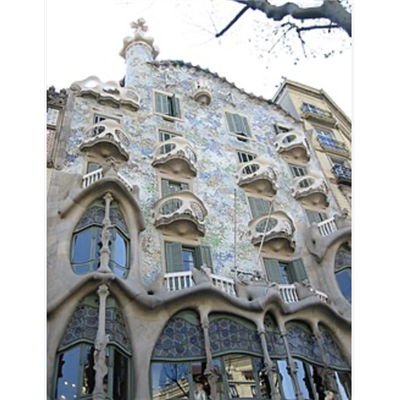 |
Antoni Gaudí is well known and much loved. In this lecture, his work will be explored in detail. It will be shown how he engaged with nature in the most innovative and extraordinary ways. Inspired by honeycombs and spiders' webs, armadillo skins and mushrooms, trees and whales' bellies, he worked with extraordinary ceramicists, iron workers, tilers and decorative artists. We will look at his public and private buildings and his relationship with a wealthy and demanding patron. Private shy and retiring he was also humorous and witty in his extravagant style. However, it will also be the aim of this lecture to uncover some of the other architects working in Barcelona over the turn of the twentieth century; Domenech y Muntaner and Puig y Cadafalch. Attention will be paid to several significant and ravishing buildings and some less well-known buildings in Barcelona. Jacqueline is Managing Director of Art and Culture Travel, running residential courses in Andalucía, Southern Spain in the art and culture of the region as well as curated tours to Madrid, Tangiers, Barcelona, Paris and Venice. Jacqueline is a course director and lecturer at the V&A and also lectures at The Royal Academy, She has toured New Zealand and Australia for The Arts Society. Her specialist field is Spanish Art, but she also lectures on European Art 1790-1950. |
|
| Thursday, 17 December 2026 |
| THE GODFATHER OF STREET ART - KEITH HARING
|
| Pepe Martinez |
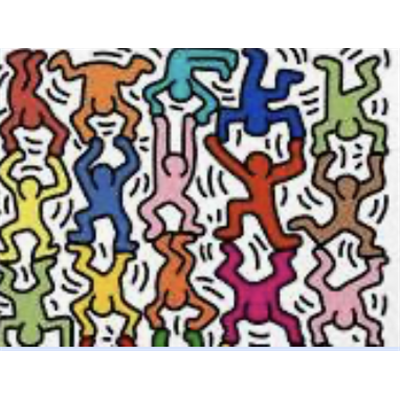 |
In a relatively short time, Keith Haring went from tagging the New York subway to being shown and represented in some of the most important galleries in America. Collaborating with people like John Michel Basquiat and Andy Warhol, his relatively short life was ended by AIDS in the early 1990s. His reputation and his influence on the world of graffiti street art has only grown since then. This lecture will look at his life and examine how his aesthetic has influenced graffiti and street artists working today. Pepe Martinez qualified as a London blue badge tourist guide in 2011, graduating at the top of his class. Since qualifying as a guide he has specialised in the graffiti and street art of East London. |
|
| Thursday, 21 January 2027 |
| TRAVELS WITH A TROWEL: ADVENTURES OF AN ARCHAEOLOGIST
|
| Louise Schofield |
 |
In the year 2000, having been a Curator in the Greek And Roman Department of the British Museum for 13 years, Louise decided to escape. Given a trowel with a diamond and silver casing in the handle as a leaving present, she set off on a series of extraordinary archaeological adventures. In this richly illustrated talk she will take you with her to a mysterious and atmospheric ancient city on the coast of southern Albania, to the banks of the two great rivers of Mesopotamia - the Euphrates and the Tigris - and then to the wild and wonderful mountains of northern Ethiopia. Louise Schofield is an archaeologist who was Curator of Greek Bronze Age and Geometric Antiquities at the British Museum from 1987-2000. Her book, The Mycenaeans, was co-published by the Getty Museum and the British Museum in 2007. She now writes, lectures and runs international archaeological projects - previously in south-eastern Turkey, Greece and Albania and currently in Ethiopia. And rather wonderfully she has just been appointed Visiting Professor of Archaeology at the American University of Rome. |
|
| Thursday, 18 February 2027 |
| Modigliani |
| Lucrezia Walker |
 |
|
|
| Thursday, 18 March 2027 |
| THE ECHOING SCREAM: THE BIRTH OF EXPRESSIONISM |
| Gavin Plumley |
 |
When Edvard Munch created The Scream in 1893, he was responding to an intense emotional experience. Today, we would call it a panic attack. Crippling and anxious making, this primal cry was also a rallying call: for Munch and for the wider world of art. It gave birth to a movement known as expressionism, showing life not at it is (realism) or as it might be perceived in a fleeting moment (impressionism), but as it is experienced within the unembellished core of our being. Explosive and emotive, the aftershocks of Munch’s vision were felt across the world: in art and music, literature, dance and film. Charting the origins of expressionism and its historical context, this multifaceted talk embraces artists and thinkers such as Kandinsky, Klee and Schiele, Nietzsche, Freud and Schoenberg, pondering the radical ways in which they both reflected andignited our inner feelings. |
|
| Thursday, 15 April 2027 |
| THE ART OF ATONEMENT: HOW GERMANY COMMEMORATES THE SECOND WORLD WAR |
| Angela Findlay |
 |
In the context of our World War centenaries, anniversaries and the current debate about statues and monuments, the subject of this talk is hugely relevant. In this country, relatively little is known about Germany’s complex post-WW2 process of ‘coming to terms with’ the atrocities of its recent past and the counter memorial movement that started in the eighties and continues to this day. Germany’s very specific situation rendered all traditional concepts of monuments and memorials irrelevant and inappropriate. Instead of commemorating their own losses, German artists created art forms that responded to questions of apology and atonement: How does a nation of former persecutors mourn its victims? How do you remember what you would rather forget? The idea behind counter memorials is to keep the memories and lessons of the past alive in the individual psyches of the people. The results are extraordinary, brave and inspiring. With her Anglo-German roots, artistic background and years of research, Angela is in an ideal position to give insights into Germany’s fascinating and on-going efforts to find artistic forms to remember and apologise for one of history’s darkest periods. |
|
| Thursday, 20 May 2027 |
| Some strange and fascinating personalities’ R B Kitaj and the school of London |
| Monica Bohm-Duchen |
 |
In a 1976 catalogue essay, American-born artist R.B.Kitaj coined the still- used term ‘The School of London’ to refer to a small and colourful group of London-based painters – most of them, significantly, born elsewhere - who despite the primacy of abstract art in the previous two decades, remained firmly committed to the depiction of the human form in all its vulnerability and psychological complexity. Kitaj himself was one of the group; the others included Francis Bacon, Frank Auerbach, Leon Kossoff and Lucian Freud – all now considered towering figures in the history of contemporary British art. |
|
| Thursday, 17 June 2027 |
| TINKER, TAILOR, CANVAS, CHAIR: HOW MODERNISM BECAME A COLD WAR SECRET AGENT |
| James Vaux |
 |
This lecture reveals how the USA covertly used both Modernist design and Abstract Expressionism as cold war tools against the Soviet Bloc in the 1950s. In one of the most curious stories in art history, it explores how America's new artists were unwittingly weaponised by the CIA and how Mid-Century Modern design was used in European exhibitions...to demonstrate American cultural superiority to wavering intellectuals. The talk focuses on International Style architects and designers such as Mies van der Rohe, Marcel Breuer, Charles and Ray Eames and Florence Knoll and Abstract Expressionist painters such as Mark Rothko, Arshile Gorky, Jackson Pollock and Willem de Kooning. It looks at the politics of modernism in the run up to the 1950s and compares the new style of American painting and design with Soviet-imposed Socialist Realism. In particular, the presentation focuses on US exhibitions such as The New American Painting (Europe,1958/9) and The American National Exhibition (Moscow 1959) to demonstrate US intentions. It lays bare the secret agenda of the CIA, its extensive links to New York’s Museum of Modern Art, and how it operated behind the back of Congress. It also reveals new research on how Scandinavian Modern design became sucked into the process - in an attempt to draw the Nordic countries further into the West. Finally it asks the hundred million dollar question: would abstract expressionism achieve record prices at auction today were it not for this secret political programme of the 1950s? |
|
| Thursday, 15 July 2027 |
| MOSES IN BYZANTINE ART: SEEING THE GOD-SEER |
| Helen Dejean |
 |
The iconography of the Prophet Moses in the eastern Orthodox world has always presented a very different version from that found in the medieval Latin west. By decoding the most important icons from Moses's cult site at Mount Sinai as well as the mosaic programmes from Ravenna, Rome and Venice, a fascinating new vision of this most important of the Old Testament figures -and what he meant to the Byzantines - emerges. This new lecture is based on Helen's doctoral research and field work to St Ctherine's Monastery, Sinai. |
|
| Thursday, 16 September 2027 |
| A touch of the sun |
| Sarah Lenton |
 |
The oddest star in opera is the Sun. Its appearance in The Magic Flute triggers the finale when everybody dances off bathed in happy, rational daylight. But other operas are more wary about the sun. It is surely the baking heat that precipitates the disastrous passions in Carmen and Aida, and what about that moment in the year when the sun is at its strongest? |
|
| Thursday, 21 October 2027 |
| AN INTRODUCTION TO THE NEWLYN SCHOOL (1880 – 1910) |
| Alison Bevan |
 |
In the 1880s, the fishing village of Newlyn in the far West of Cornwall became a mecca for rural realist painters, who documented the lives of the local community in their beautiful and moving paintings. This talk will outline the key characteristics of this famous art movement, introducing the ‘father of the Newlyn School’ Stanhope Forbes and his talented wife Elizabeth (nee Armstrong), along with a host of their fellow artists, including Frank Bramley, Walter Langley, Albert Chevallier Tayler and Henry Scott Tuke tales, as well as some of the real-life characters they depicted. |
|
| Thursday, 18 November 2027 |
| KRAKOW - 'THE CITY OF THE DRAGON' |
| Douglas Skeggs |
 |
Founded back in a time when history is indivisible from legend, Krakow was the ancient capital of Poland up until the 17th century. Its great market square, the spider’s web of medieval streets, the curiously irregular towers of St Mary’s with its magnificent carved altarpiece, the university where Copernicus first studied the stars, and, above all the majestic cathedral over-looking the Vistula river, where the king’s of Poland are buried, tell the story of this turbulent country. This lecture is a personal tour of Krakow in search of the gems of art and architecture, the triumphs, the tragedies and the twists of fate that have shaped this remarkable nation. |
|
| Thursday, 16 December 2027 |
| THE MAGIC FLUTE - THE STORY OF MOZART'S FAMOUS OPERA |
| Peter Medhurst |
 |
The Magic Flute is one of the best loved of all Mozart's operas and charms audiences as much today as it did those at the end of the 18th century. However, beneath the surface of the music are many complexities, ambiguities and hidden secrets, which when revealed may well enhance the listener’s understanding and enjoyment of the work. By following the progress of Tamino - the opera’s hero – Peter Medhurst shows that Mozart’s opera is one of the finest musical products of the enlightenment |
|